.png)
Join the Waitlist! BLUEPRINT FOR CONNECTION Curriculum Coming Soon!
.png)
You Belong Here builds practical life skills, starting in Kindergarten, that emphasize healthy relationships and connection. These evidence-informed skills also address, both directly and indirectly, the root causes of violence, promoting safety, mental wellness, and help-seeking in risky situations.
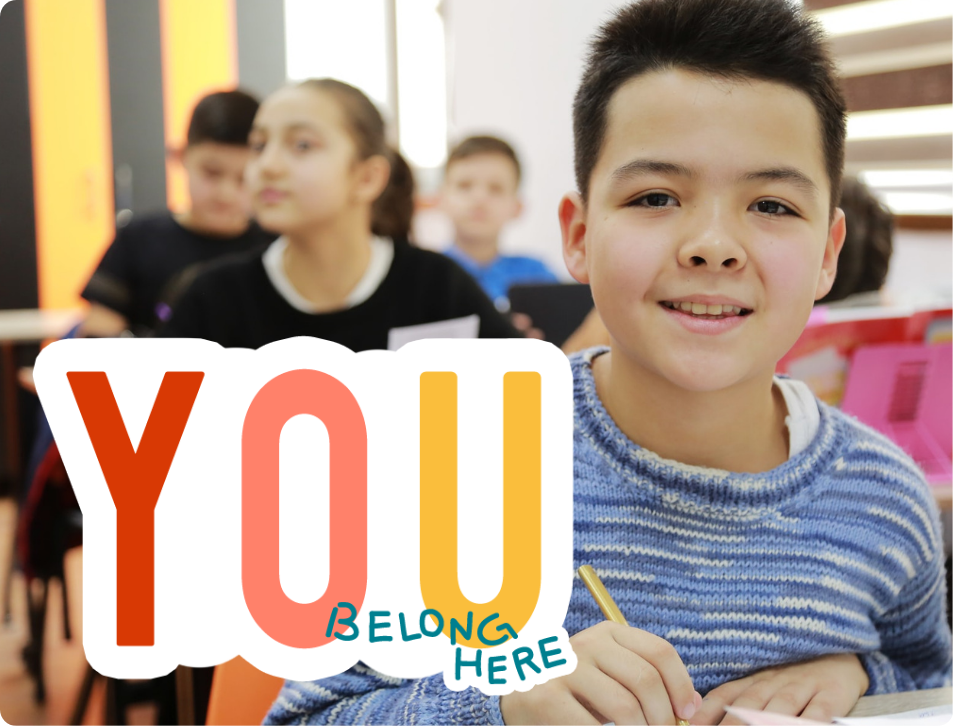
When young people don’t feel they matter, they seek significance wherever they can find it, including in risky, harmful, or violent behaviors.

100+ lessons aligned with the social-ecological model of violence prevention and grounded in Significance Quest Theory (SQT).
Recognizing that violence stems from common roots, this curriculum asks how we can build better relationships and more connected communities. YBH proactively impacts bullying, teen dating violence, sexual violence, peer-to-peer violence and self-harm.

In alignment with CASEL framework

In alignment with the National Health Education Standards

In alignment with the CDC National Standards
Following violence prevention research, we created a curriculum that teaches the skills and buffers the protective factors proven to reduce violence and harm among youth.

Self-Regulation
Setting and Respecting Boundaries
Communication
Non-Violent Problem Solving
Managing Conflicts with Respect
Making Sincere Apologies
Healthy Breakups
Handling Rejection Constructively
Pro-Social Connections
Expectations for healthy, non-violence relationships
Positive Mental Health
Boundary Setting
Assertive Communication
Critical Thinking
Media LIteracy
Upstander Behavior
Self-Care & Coping Strategies
Help-Seeking
Grooming Tactics Awareness
Abuse Awareness
Exploitation Awareness
Radicalization Awareness
Trafficking Awareness
Support During Difficult Life Events
Community Connectedness
Safe & Trusted Adults
Stable Identity
Critical Thinking
Social Responsibility
Collaboration & Community Building
Upstander Behavior
Expectations for healthy, non-violent relationships
Community Connectedness
Connection to School
Cultural Norms that do not support aggression towards others
.png)
Hear direct from students and teachers who were impacted by Nest's curriculum
Students begin each grade level by establishing their own community agreements, creating a collaborative space for learning and growth. Lessons then progress from developing personal skills and healthy relationships to understanding how students can create positive change in their broader communities.
Kindness in Kindergarten Part A
Kindness in Kindergarten Part B
Managing Big Feelings
Boundaries: Asking for & Giving Consent
Boundaries: Safe & Unsafe Behaviors
Bullying & Upstander Behavior
Respecting Others & Belonging
Making Space for Grief & Loss
Kindness & Connection
Managing Strong Emotions
Boundaries: Safe & Unsafe Behaviors
Bystander Behavior & Help Seeking
Respecting Others & Belonging
Grief & Loss
Who Am I: Identity and Decision Making
Forming Community Agreements
Why and How Do We Connect?
Connection Through Kindness
Building a Belonging Community
Significance and Building Resilience
Digital Wellbeing
Cyberbullying
Rejection and Social Pain
Mental Health & Illness
Lacking Belonging, Losing Significance
Grooming: Who Do We Trust Online?
Radicalization and Media Literacy
Relationship Behaviors
Communication and Conflict Resolution
A Blueprint for Belonging
Introduction
The Danger of Silence
What is a Healthy Relationship?
How to Argue
How to Apologize
Building Stronger Connections: Boundaries & Control
Building Stronger Connections: Consent & Rejection
How Might We Break Up?
How Might We Handle Rejection?
Why Consent Matters
How Might We Better Protect Ourselves & Others?
How Might We Make Change Happen?
Prototyping Our Solutions
Presenting Our Solutions
Final Reflection: Values, Strengths, and Future Visions
The Interconnectedness of Violence
Biased Attitudes Part 1: Social Identity & Groups
Biased Attitudes Part 2: Culture
Digital Dynamics: Understanding Dehumanization & Social Media Responsibility
From Attitudes to Actions
Understanding Radicalization and Supporting Peers
Case Studies: Violence Pyramid
Building Connections Across Differences
Understanding Other Perspectives
What Makes an Active Bystander?
Violence Prevention: Project Planning
Violence Prevention: Project Presentations
Final Reflection: Values, Strengths, and Future Visions
Nest offers 2-Lesson Modules, available for individual purchase, covering the most crucial topics in You Belong Here. These modules are perfect for educators facing implementation restrictions and pair well with Nest’s other connection curricula: Blueprint for Connection and Human Voices.
coming soon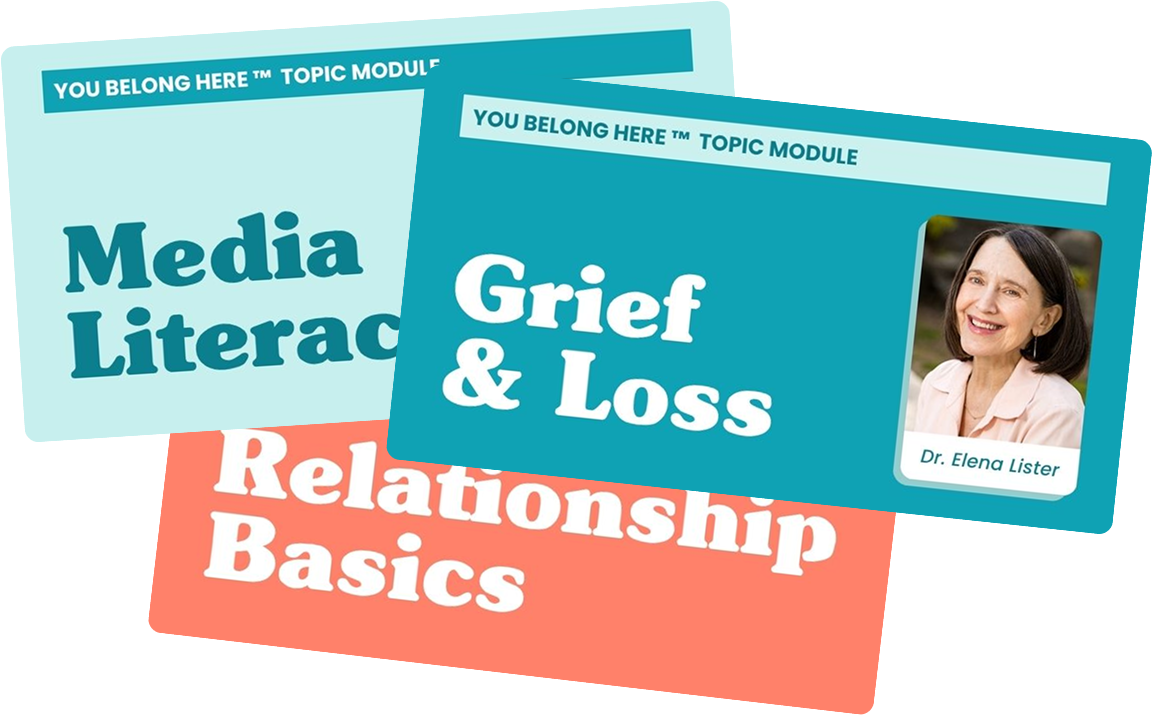
Our 'You Belong Here' (YBH) curriculum prevents violence by addressing the interconnectedness of all acts of harm, and uncovering their single root cause - the human need for significance & belonging. Using proven social-emotional learning (SEL) framework, our programming builds empathy, accountability, gratitude, and emotional agility through human-centered education. Nest students ultimately build better connections and stronger communities so they can flourish both in their childhoods and throughout their lives.
Yes, YBH lessons are designed with a gradual scaffold and build upon each other. Teaching them in order will assure that students develop the necessary skills to move forward with the material.
There are 5-6 lessons for each unique grade level, except at the middle school level. Based on Health standards, 7th and 8th grade lessons are combined.
The YBH curriculum is aligned with national and state Health Education standards, therefore Health educators typically teach this material. However, every school district/organization can decide who is the most qualified (and trained) to facilitate the YBH curriculum.
The lessons within this curriculum address challenging topics. They have been created for skill building, engagement, discussion, and critical thinking. Facilitators should prepare 45-50 minutes for lessons, if being taught in its entirety.
Asynchronous training will be embedded in the teacher portal. School districts/organizations can request live training in person training for an additional cost.
Yes, any trained professional can facilitate these lessons.
Build a complete approach to connection. Pair this with complementary NEST programs to strengthen belonging schoolwide.
Student-led, project-based civic engagement curriculum
Takes connection basics to the community.
Begin with the connection basics.
Bring the foundational skills of connection to the classroom. Simple implementation as a 3-hour workshop or three 1-hour lessons.
.png)

.png)
.png)
.png)

.png)